How Many Nits Should Your Outdoor TV Be?
Covered patio, partial sun or full sun? See how many nits your outdoor TV needs (4,000 to 7,000), plus why glare, heat and weather protection matter too.
In This Guide
- 01.What Is a Nit, and Why Does It Matter Outdoors?
- 02.Outdoor TV Brightness Comparison Table
- 03.Covered Patio: About 4,000 Nits
- 04.Partial Sun: 4,500–5,000 Nits
- 05.Direct / Full Sun: 5,000–6,000+ Nits
- 06.Direction and Orientation Matter
- 07.Time of Day Matters
- 08.Why Nits Alone Are Not Enough
- 09.Find the Right Brightness for Your Space
- 10.Frequently Asked Questions
Your outdoor TV should be about 4,000 nits for a covered or heavily shaded patio, 4,500–5,000 nits for partial sun, and 5,000–6,000+ nits for direct or full sun. For especially demanding spaces, such as west-facing screens, poolside setups, or spots with strong reflected light, YOLO TV offers configurations of up to 7,000 nits. The right number depends on three things: how much sun hits the screen, which direction the screen faces, and what time of day you watch.
Brightness is only part of the picture. Glare control, contrast, and heat management matter just as much when choosing a TV that stays readable outside.
Key Takeaway
- Covered / heavily shaded: about 4,000 nits
- Partial sun: 4,500–5,000 nits
- Direct / full sun: 5,000–6,000+ nits (YOLO TV's standard outdoor configuration delivers about 6,000)
- Challenging high-ambient-light spaces: up to 7,000 nits
Match the brightness to where the TV goes, which way it faces, and when you'll watch it.
These are planning guidelines. Final brightness should be determined from the actual installation environment.
What Is a Nit, and Why Does It Matter Outdoors?
A nit is a unit of brightness equal to one candela per square meter. It measures how much light a screen puts out. A typical indoor TV is designed for a living room and usually outputs somewhere in the hundreds of nits, with some premium models reaching higher peaks in HDR highlights. That's plenty in a room with curtains and lamps, but daylight is dramatically brighter than any indoor environment. When sunlight falls on or around a screen, it washes out the image, and the TV has to push out enough light to compete.
That's why outdoor TVs are measured in thousands of nits, not hundreds. The question isn't whether you need a brighter screen outdoors. It's how much brighter, based on your specific space.
Outdoor TV Brightness Comparison Table
| Installation area | Sun exposure | Recommended brightness | Typical examples |
|---|---|---|---|
| Covered / heavily shaded | Little to no direct sun on the screen | About 4,000 nits | Covered patios, deep pergolas, outdoor kitchens under a roof |
| Partial sun | Direct sun for part of the day | 4,500–5,000 nits | Open-sided pergolas, patios with shifting shade, awnings |
| Direct / full sun | Sun on or near the screen for long stretches | 5,000–6,000+ nits | Pool decks, rooftop terraces, open backyards |
| Challenging high-ambient-light | Intense sun, reflections, or west-facing afternoon glare | Up to 7,000 nits | West-facing walls, reflective water or light-colored surfaces nearby, commercial venues |
These ranges are YOLO TV's recommendations based on our installation experience. YOLO TV outdoor systems are available from 4,000 to 7,000 nits, with about 6,000 nits as the standard configuration.
Covered Patio: About 4,000 Nits
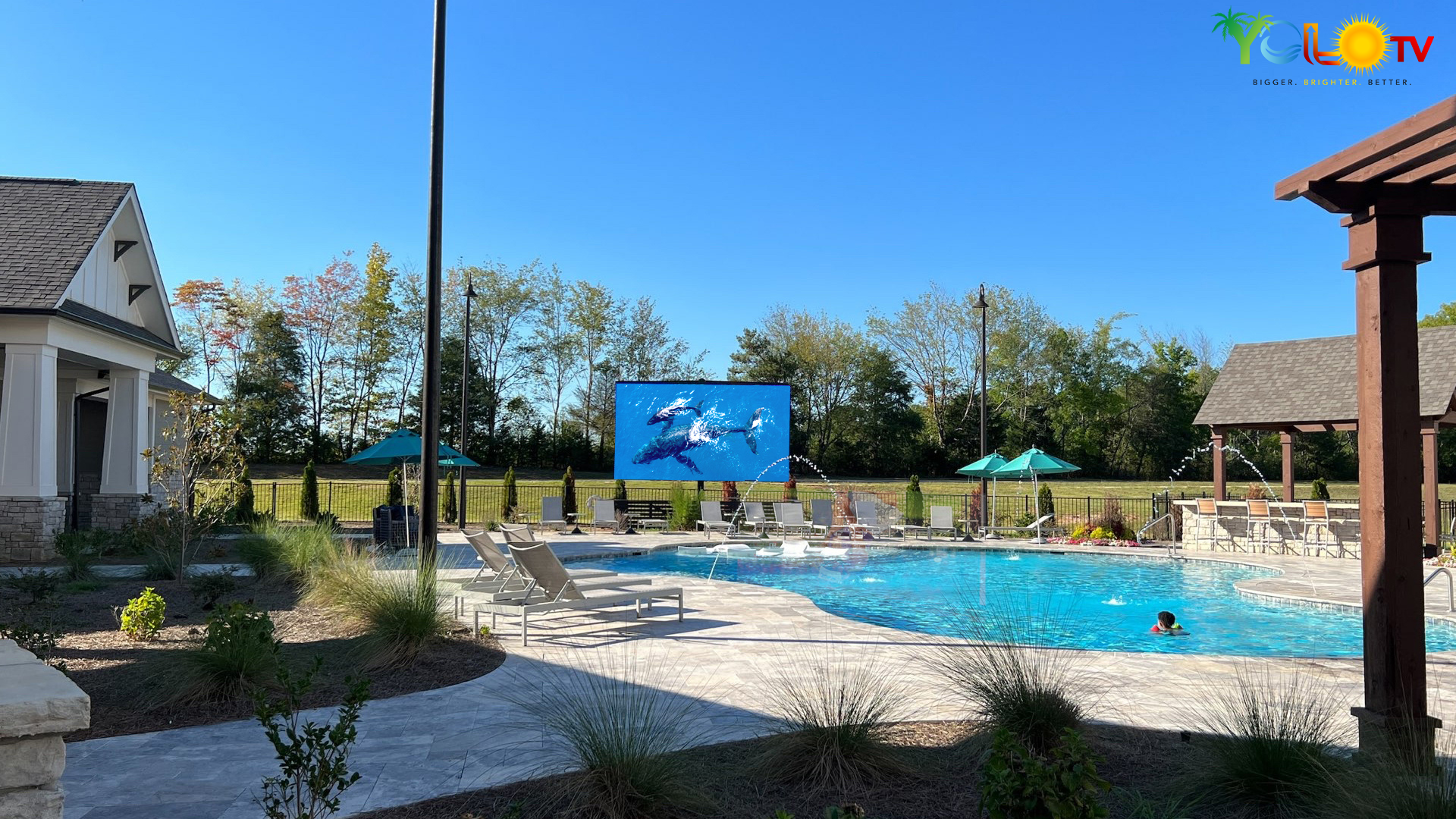
If your TV sits under a solid roof, a deep overhang, or in heavy shade most of the day, around 4,000 nits is usually the right range. Even without direct sun, daylight bounces off patios, pool water, walls, and light-colored surfaces, and that ambient light is far stronger than anything indoors. A screen in this range stays clear and colorful through daytime viewing without being overkill for evening use.
One caution: "covered" doesn't always mean "shaded all day." A patio that's shaded at noon can take low-angle sun in the late afternoon. If your covered space faces west or has open sides, consider stepping up to the partial-sun range.
Partial Sun: 4,500–5,000 Nits
Partial sun covers the most common real-world situation: a screen that gets direct sunlight for part of the day and shade for the rest. Think open pergolas, patios with shade that moves, or spaces covered by an awning that doesn't block low-angle light. In these spaces, 4,500–5,000 nits gives you enough headroom to keep the picture watchable when the sun swings around, instead of losing the game right when the light shifts.
Direct / Full Sun: 5,000–6,000+ Nits
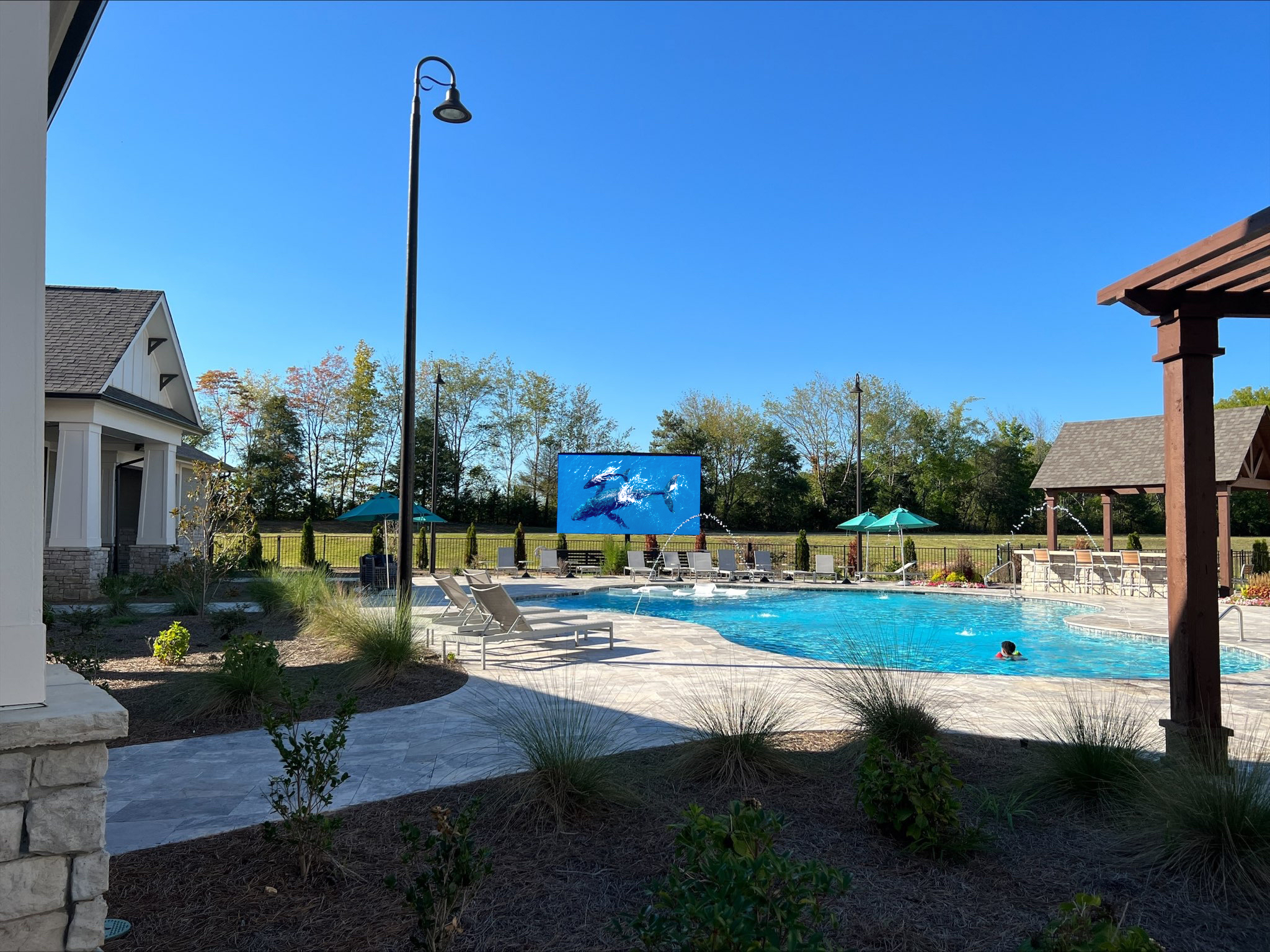
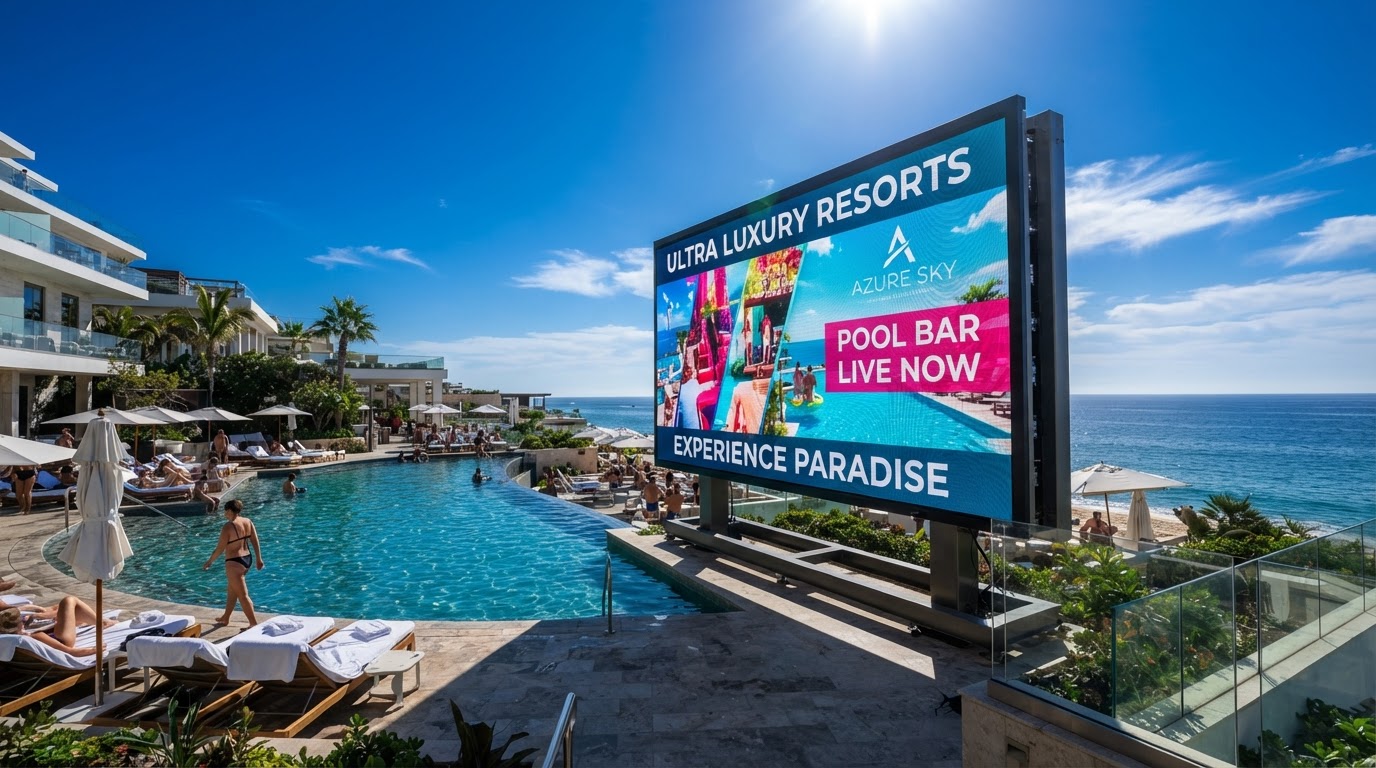
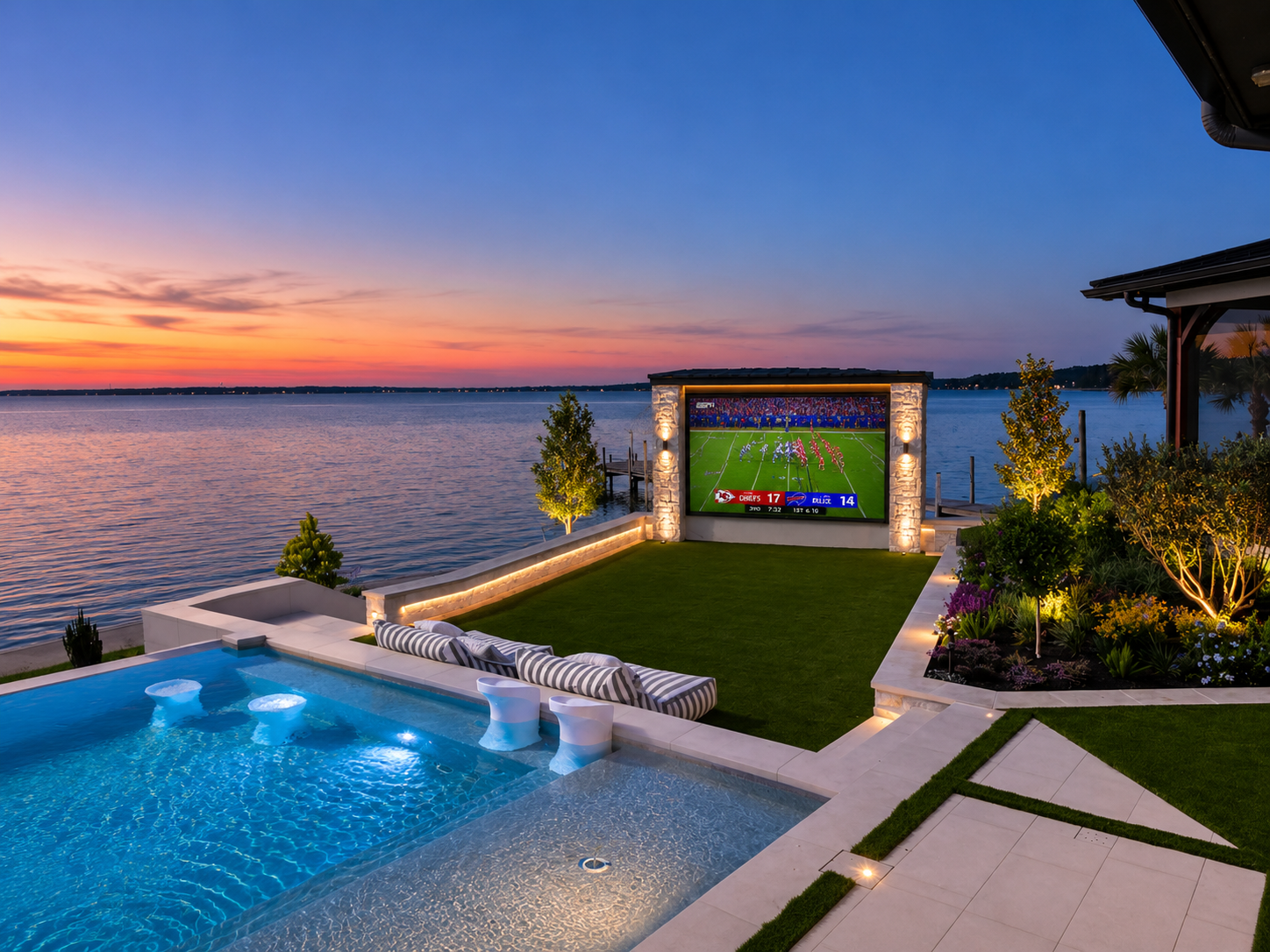
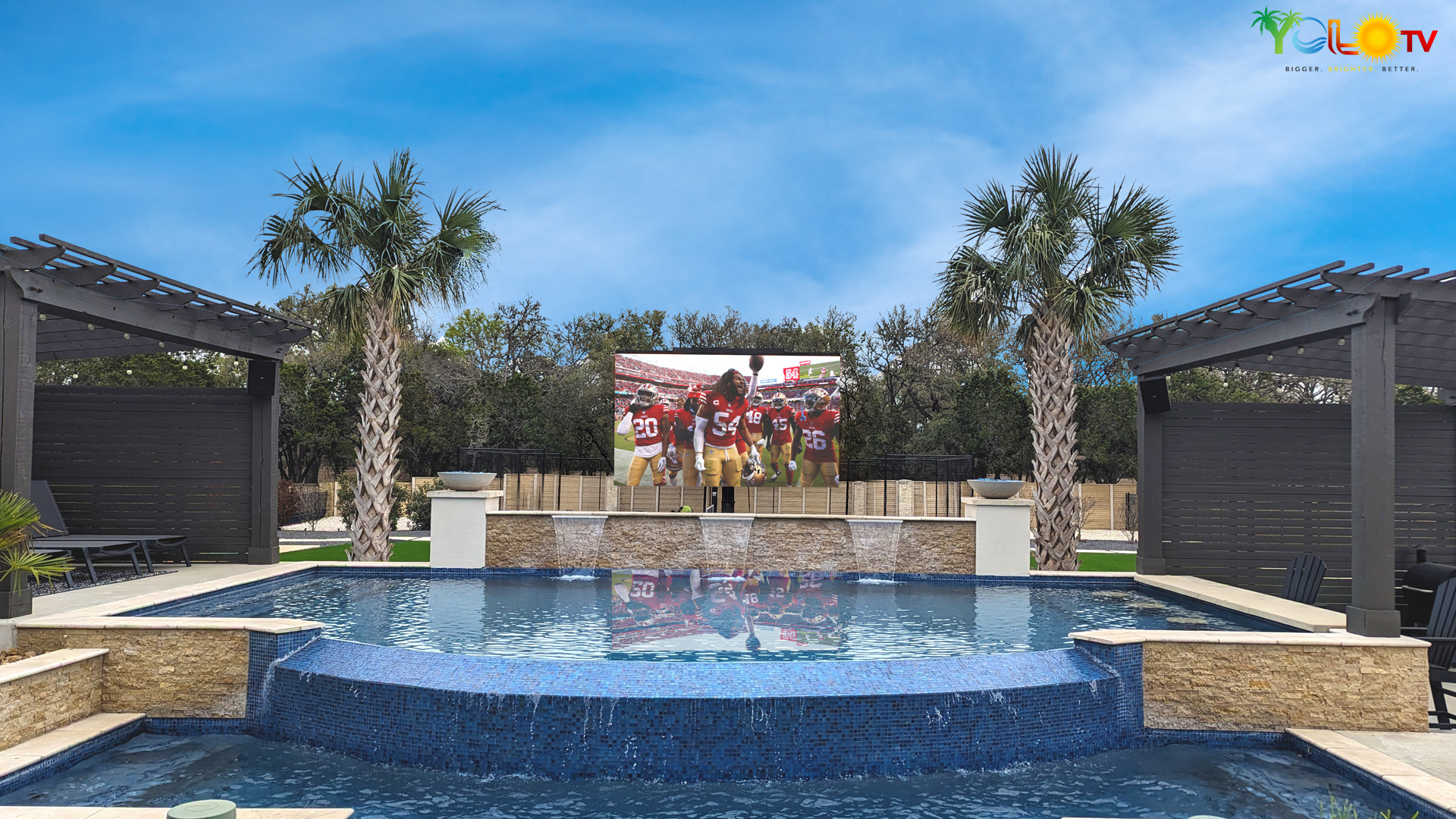
When sunlight hits the screen or the area around it for long stretches, you need 5,000 nits or more. Pool decks, rooftop terraces, and open backyards fall into this category. At this level of ambient light, a lower-brightness screen can look dim and gray even when it's technically working perfectly. YOLO TV's standard outdoor configuration delivers about 6,000 nits, and in the most demanding cases we offer configurations up to 7,000 nits so the picture holds up in the harshest conditions.
Direction and Orientation Matter
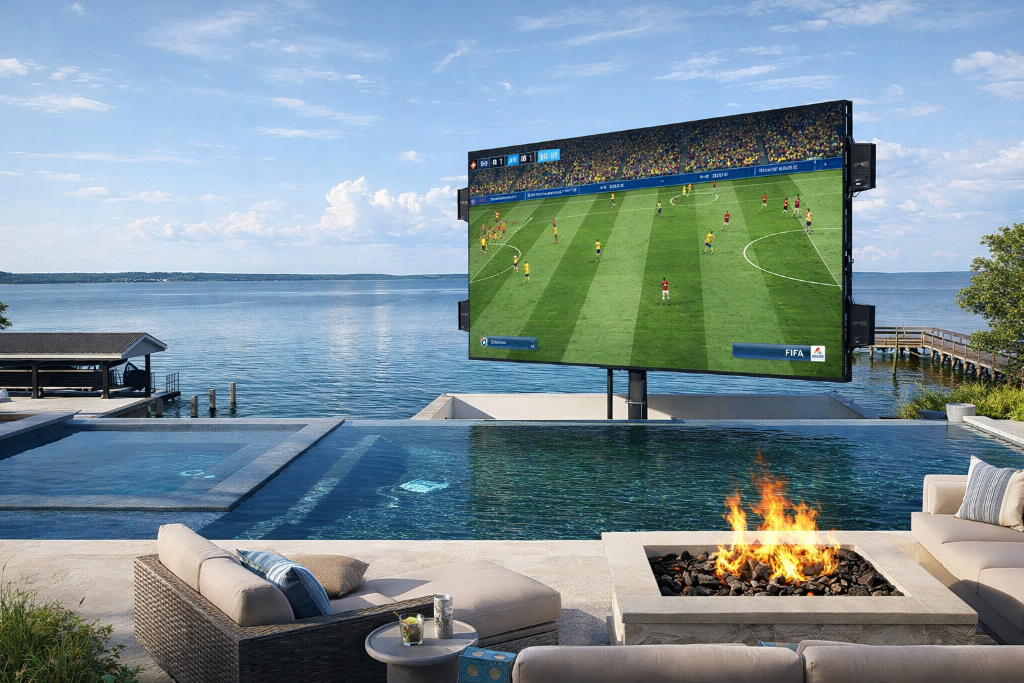
The direction your TV faces can change the brightness you need as much as whether it's covered. In the Northern Hemisphere, a west-facing screen takes the full force of low afternoon and evening sun, often right in the middle of prime viewing time for games and gatherings. An east-facing screen gets morning sun but is often in shade by afternoon. North-facing screens typically see the least direct sun, while south-facing screens can get sun through much of the day.
Low-angle sun is especially tricky because it can slip under roofs and overhangs that block midday light. That's why a "covered" west-facing patio sometimes needs partial-sun or even full-sun brightness. Before choosing a TV, notice where the sun hits the wall or mounting location at different times of day. Mounting matters too: YOLO outdoor displays can be wall-mounted, pole-mounted, suspended, rotated, or hidden in a Rise™ lift, which gives you more freedom to aim the screen away from the worst glare. See the outdoor display sizes and mounting options.
Time of Day Matters
A TV that looks great at 9 PM can be nearly unreadable at 3 PM. If you mostly watch in the evening, a lower brightness range may serve you well. If you plan to watch afternoon football, daytime pool parties, or weekend golf, you need a screen built for the brightest hours your space sees.
A simple way to think about it: choose your brightness for the hardest viewing time you actually care about, not the easiest one.
Why Nits Alone Are Not Enough
It's tempting to shop for the biggest nit number, but brightness is only one part of outdoor performance. Several other factors decide whether you can actually see the picture outside.
Glare and reflection control. A bright screen with a reflective surface can still be washed out by reflections. Anti-glare and anti-reflective treatments reduce how much sunlight bounces back at you, which can make a bigger visible difference than a few hundred extra nits.
Contrast. Brightness without good contrast gives you a picture that's bright but flat. Deep blacks and strong contrast keep the image sharp and detailed in daylight.
Heat management. Sun loading can push a screen's temperature up quickly. Outdoor TVs need to be engineered to handle heat so the display stays stable and doesn't darken or fail in hot conditions, especially in climates like Las Vegas or Phoenix. YOLO outdoor displays use active internal thermal management for this reason.
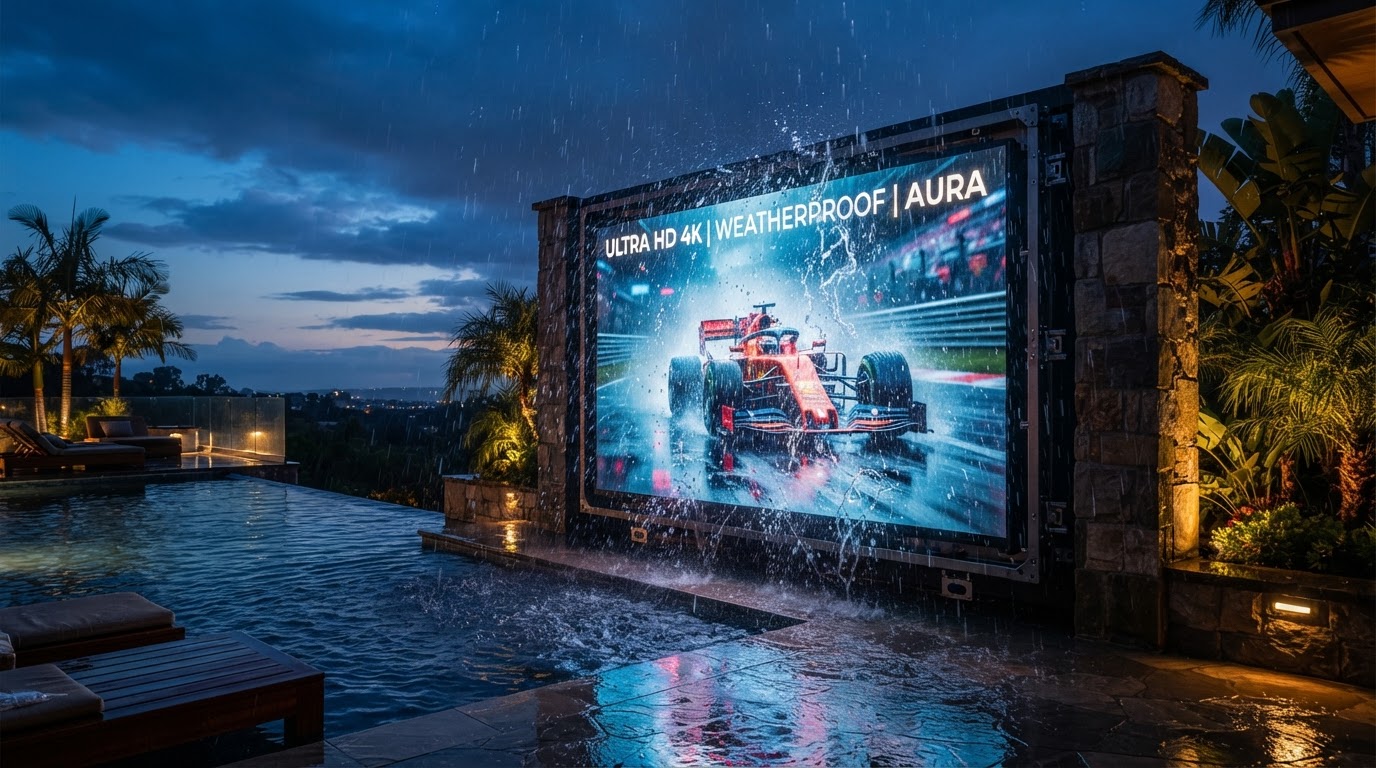
Weather protection. Rain, dust, humidity, and temperature swings all take a toll. A truly outdoor-rated TV is built to handle the environment, not just survive it. YOLO outdoor displays use IP65–IP68 weather-sealed, marine-grade enclosures and are covered by a five-year residential warranty.
Polarized sunglasses compatibility. Some screens can appear dark or blacked out through polarized lenses, which matters when people are watching outside in sunglasses.
The best outdoor TV is the one matched to your space, not simply the one with the highest number on the spec sheet.
Find the Right Brightness for Your Space
Not sure which range fits your patio, pool deck, or backyard? Tell us where your TV is going, which direction it faces, and when you'll be watching. The YOLO TV team will recommend the right configuration, from 4,000 to 7,000 nits, for your exact space, usually within 24–48 hours.
Prefer to talk it through? Call (844) 4YOLOTV / (844) 496-5688, Monday–Friday, 8 AM–6 PM CST.
Frequently Asked Questions
Quick answers to the questions homeowners ask most.
It depends on sun exposure. YOLO TV recommends about 4,000 nits for covered or heavily shaded areas, 4,500–5,000 nits for partial sun, and 5,000–6,000+ nits for direct or full sun. Challenging high-ambient-light spaces may need up to 7,000 nits.
For most outdoor spaces, no. Around 1,000 nits can work in deep shade or at night, but daytime ambient light usually washes it out. For covered patios, YOLO TV recommends starting at about 4,000 nits.
Yes. West-facing screens take strong afternoon and evening sun, often during peak viewing hours, and may need a higher brightness range than their coverage alone suggests.
Not if you can turn it down. A high-brightness display can be dimmed for evening viewing. One YOLO TV owner runs their display at 10% brightness at twilight for a soft backyard glow. Buying for your brightest viewing hours is the safer choice.
No. Glare control, contrast, heat management, and weather protection all affect how well you can see the screen outside. Nits are the starting point, not the whole decision.
Indoor TVs aren't built for outdoor brightness, heat, or moisture. They're typically far too dim for daytime outdoor viewing and can fail from exposure to the elements.
Written by YOLO TV
YOLO TV designs and installs luxury outdoor TVs, hidden Rise™ TV systems, and custom outdoor entertainment solutions for homeowners, builders, architects, designers, and AV integrators. Our engineering team specializes in creating unforgettable outdoor viewing experiences.
Standard Specifications
- Display Type
- Direct-view LED
- Covered Patio
- About 4,000 nits (planning)
- Partial Sun
- 4,500–5,000 nits (planning)
- Direct Sun
- 5,000–6,000+ nits (planning)
- Standard Config
- About 6,000 nits
- High-Ambient Configs
- Up to 7,000 nits
- Weather Protection
- IP65–IP68
- Warranty
- 5-Year Residential
Find the Right Display for Your Outdoor Space
Send YOLO TV a few pictures of your backyard, your installation address, and your approximate viewing distance. We'll help determine the size, brightness, and configuration that make sense for your space.
You May Also Like
More guides and case studies from the YOLO TV engineering team.