How Many Nits Do You Really Need for Direct Sunlight?
Brightness is the single biggest factor in outdoor visibility. Here is the real-world nit count your display needs to stay legible under a midday Texas sun.
In This Guide
When a screen sits in full sun, brightness is not a luxury spec, it is the difference between a display you can read and a mirror reflecting the sky.
The Brightness Threshold
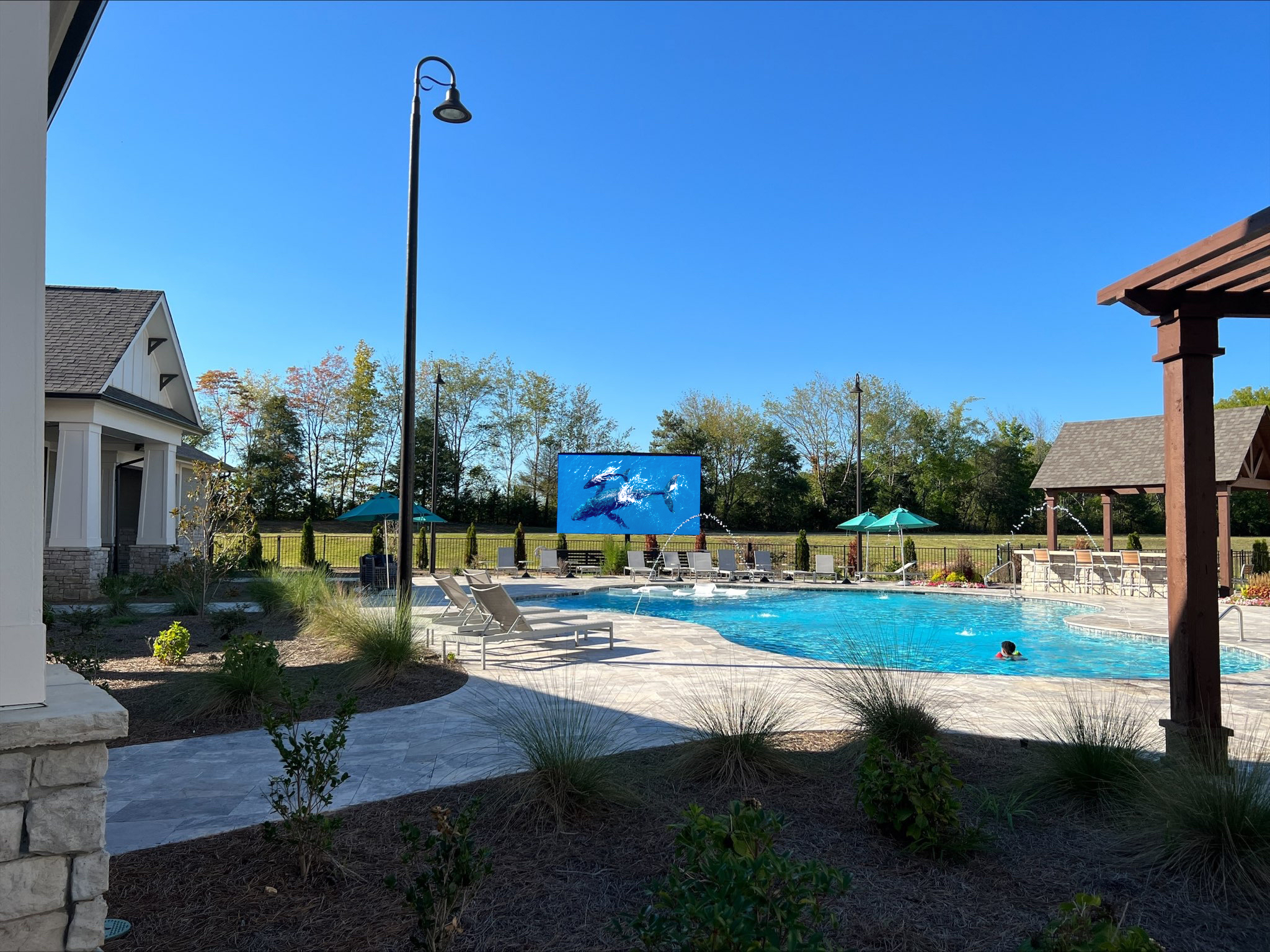
A panel becomes comfortably legible in direct sunlight once it clears roughly 5,000 nits. Below that, ambient light overwhelms the emitted image and the surface turns reflective. The problem is not that the screen is dim; it is that sunlight is dramatically brighter than any image a display can produce. Midday sun can deliver 100,000 lux or more to a panel surface, and a display has to push out enough light to maintain a usable contrast ratio against that load.
| Condition | Minimum Nits | Recommended |
|---|---|---|
| Shaded patio / covered lanai | 2,500 | 3,500–4,000 |
| Partial sun, morning or evening | 3,500 | 4,500–5,000 |
| Full direct midday sun | 5,000 | 6,000+ |
These are planning guidelines. Final brightness should be determined from the actual installation environment, including screen orientation, sun exposure, and viewing hours.
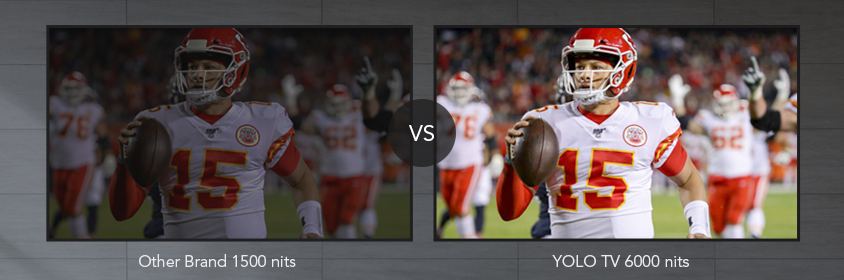
Why 6,000 Is the Safe Number
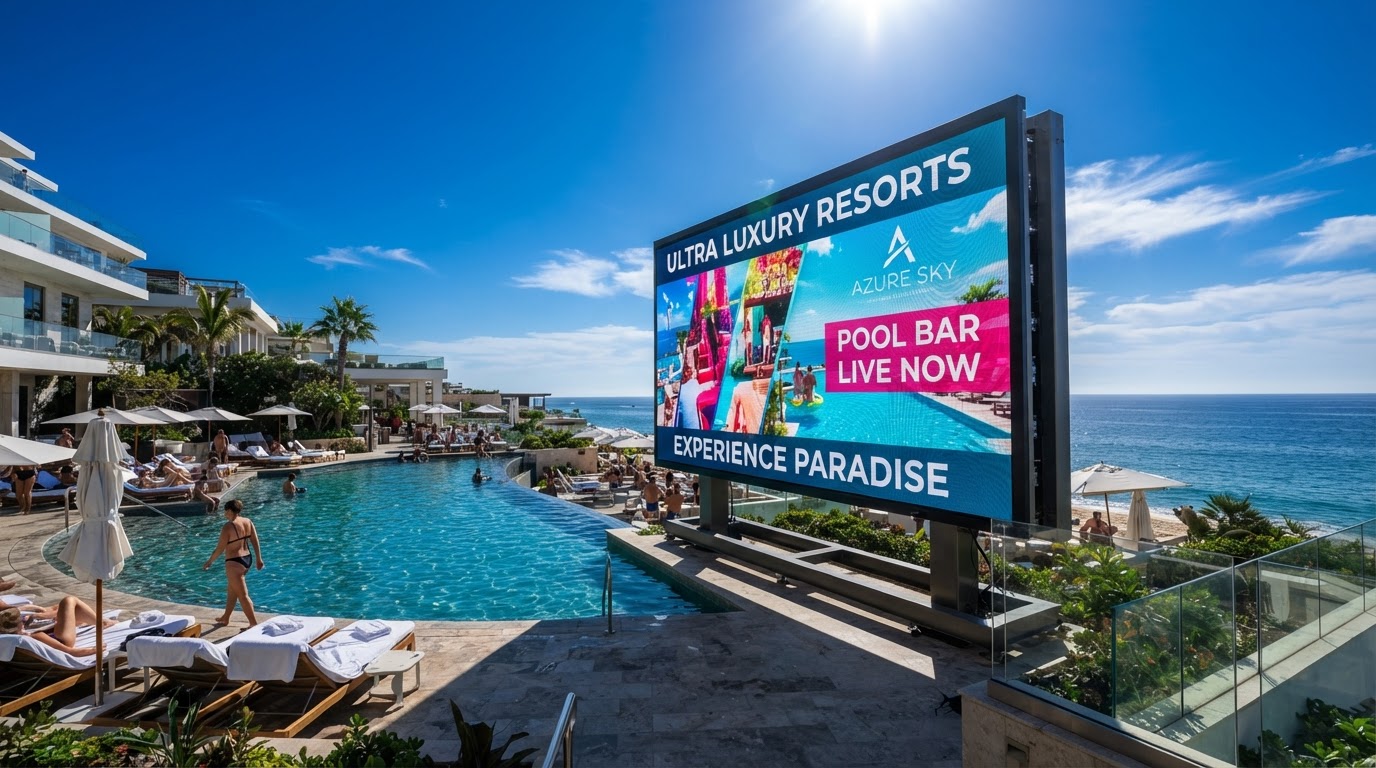
Texas midday sun can hit 100,000 lux at the panel surface. A 6,000-nit display maintains enough contrast ratio to keep colors saturated and text crisp under that load. YOLO TV outdoor displays are engineered specifically for demanding outdoor environments. Our standard outdoor systems deliver approximately 6,000 nits of brightness, with configurations available from 4,000 to 7,000 nits based on the application. Lower-brightness consumer "outdoor" TVs, typically 700 to 1,500 nits, are built for shade, not sun. They look acceptable under a covered porch and wash out the moment direct light hits them.
Brightness is measured, not marketed. Always ask for the verified nit rating, not the marketing peak.
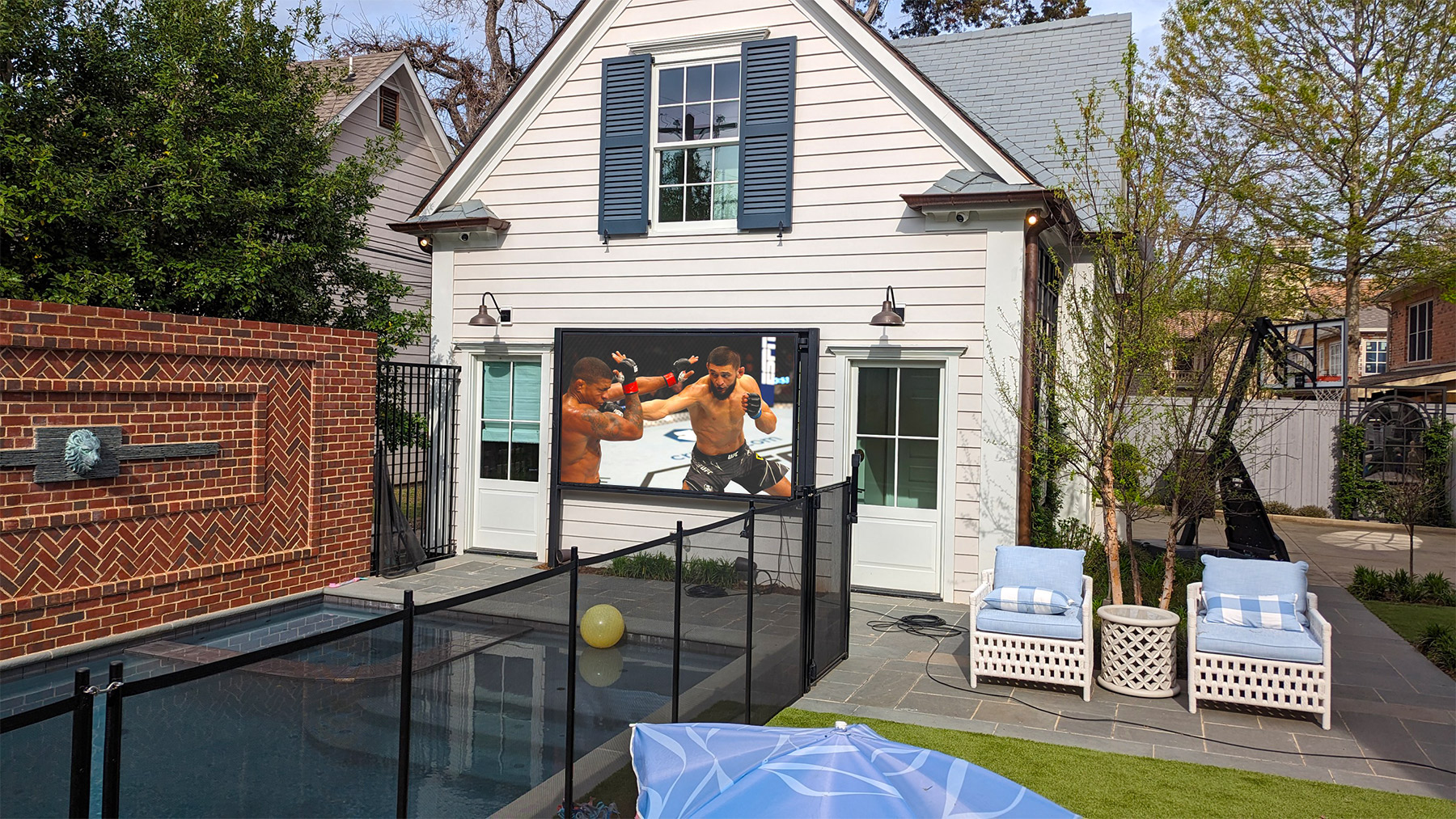
Direction and Orientation Change Everything
The direction your TV faces can change the brightness you need as much as whether it is covered. A west-facing screen takes the full force of low afternoon and evening sun, often right in the middle of prime viewing time for games and gatherings. An east-facing screen gets morning sun but is often in shade by afternoon. North-facing screens typically see the least direct sun, while south-facing screens can get sun through much of the day.
Low-angle sun is especially tricky because it can slip under roofs and overhangs that block midday light. That is why a covered west-facing patio sometimes needs partial-sun or even full-sun brightness. Before choosing a TV, notice where the sun hits the wall or mounting location at different times of day.
Time of Day Matters
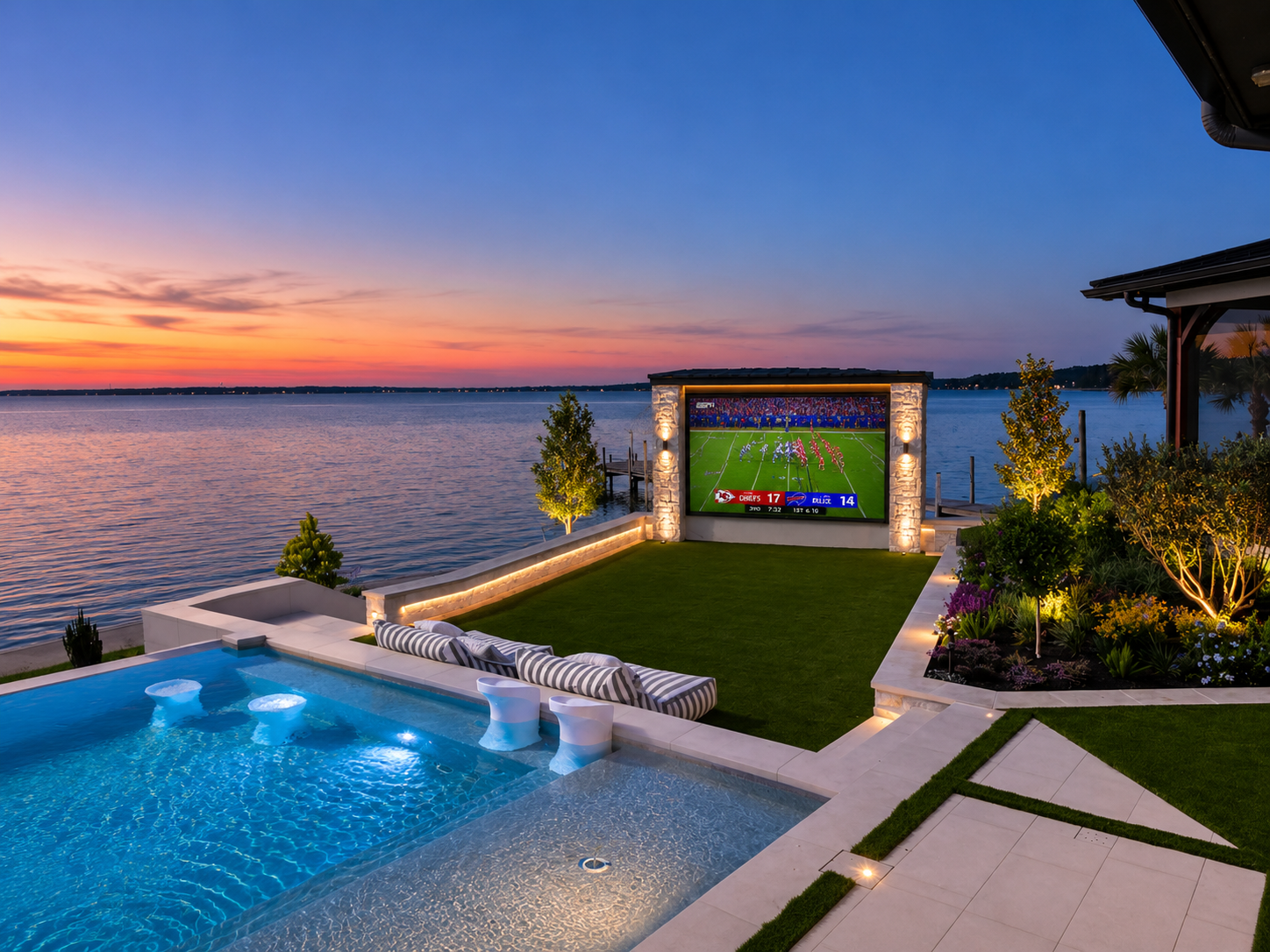
A TV that looks great at 9 PM can be nearly unreadable at 3 PM. If you mostly watch in the evening, a lower brightness range may serve you well. If you plan to watch afternoon football, daytime pool parties, or weekend golf, you need a screen built for the brightest hours your space sees. Choose your brightness for the hardest viewing time you actually care about, not the easiest one.
What Happens When a Display Is Not Bright Enough
When a screen lacks the nits to compete with its environment, the symptoms are consistent. Colors flatten and shift toward gray. Text loses its edge. Skin tones look washed out. The surface starts acting like a mirror, reflecting the sky and surrounding landscape more than it emits its own image. Viewers instinctively squint, move closer, or give up and go inside.
None of that means the display is broken. It means the display was specified for a different environment than the one it lives in. A 1,500-nit panel is a perfectly good product, under a solid roof. In full sun, it is the wrong tool.
Why Nits Alone Are Not Enough
It is tempting to shop for the biggest nit number, but brightness is only one part of outdoor performance. Contrast keeps the image sharp and detailed in daylight. Anti-glare and anti-reflective treatments reduce how much sunlight bounces back at you, which can make a bigger visible difference than a few hundred extra nits. Heat management keeps the display stable in hot conditions. And weather protection keeps moisture, dust, and humidity away from the electronics over years of exposure.
The best outdoor TV is the one matched to your space, not simply the one with the highest number on the spec sheet.
What Brightness YOLO TVs Offer
YOLO TV outdoor displays are engineered specifically for demanding outdoor environments. Our standard outdoor systems deliver approximately 6,000 nits of brightness, with configurations available from 4,000 to 7,000 nits based on the application. These are YOLO TV planning recommendations for large-format direct-view LED systems. Recommended brightness depends on factors such as screen orientation, direct sun exposure, viewing time, pixel pitch, geographic location, and intended use. The available YOLO configurations range from approximately 4,000 to 7,000 nits depending on the project, so brightness is matched to the environment rather than forced to a single fixed number.
Frequently Asked Questions
Quick answers to the questions homeowners ask most.
For full, direct midday sun, plan for 5,000 nits or more. YOLO TV's standard outdoor systems deliver approximately 6,000 nits, with configurations available from 4,000 to 7,000 nits, so the image stays legible even under intense sunlight.
It depends on the display technology, shade, reflections, and viewing time. Around 1,000 nits can work in deep shade or at night, but daytime ambient light usually washes it out. For covered patios, YOLO TV recommends starting at 3,500 nits.
Yes. West-facing screens take strong afternoon and evening sun, often during peak viewing hours, and may need a higher brightness range than their coverage alone suggests. Always evaluate actual sun exposure at the mounting location.
A very bright TV can feel intense at night, but most quality outdoor displays can be dimmed after dark. Buying for your brightest viewing hours is the safer choice, because you can always reduce brightness but you cannot add nits you did not buy.
Written by YOLO TV Engineering
YOLO TV designs and installs luxury outdoor TVs, hidden Rise™ TV systems, and custom outdoor entertainment solutions for homeowners, builders, architects, designers, and AV integrators. Our engineering team specializes in creating unforgettable outdoor viewing experiences.
Standard Specifications
- Target Brightness
- 6,000 Nits (4,000–7,000 range)
- Verified Measurement
- Calibrated, not peak
- IP Rating
- IP65–IP68 (config-dependent)
- Warranty
- 5-Year Peace of Mind Parts
Find the Right Display for Your Outdoor Space
Send YOLO TV a few pictures of your backyard, your installation address, and your approximate viewing distance. We'll help determine the size, brightness, and configuration that make sense for your space.
You May Also Like
More guides and case studies from the YOLO TV engineering team.