What Is the Difference Between IP65 and Standard Weatherproofing?
Not every 'weatherproof' TV is built the same. We break down what IP65 actually certifies and why it matters for a permanent outdoor install.
In This Guide
"Weatherproof" has no legal definition. IP ratings do. That distinction is the entire conversation when you are installing a display that will live outside for years.
Decoding the IP Code
An IP (Ingress Protection) rating has two digits that describe how well an enclosure seals out solids and liquids:
- First digit (solids): Ranges from 0 to 6. A rating of 6 is the highest possible score, meaning the cabinet is completely dust-tight, keeping fine particles, pollen, and dirt away from internal electronics.
- Second digit (liquids): Ranges from 0 to 9K. Higher numbers indicate stronger protection against water, from light splashes to powerful jets and even prolonged submersion, depending on the specific rating.
| Rating | Solids | Liquids | Outdoor use |
|---|---|---|---|
| IP54 | Dust-protected | Splashing | Covered only |
| IP65 | Dust-tight | Water jets | Full outdoor |
| IP66 | Dust-tight | Powerful jets | Storm-exposed |
| IP68 | Dust-tight | Continuous immersion | Demanding environments |
For outdoor TVs, you will most often see ratings like IP65, IP66, or IP68. Each indicates a fully dust-tight enclosure (first digit 6) with different levels of water protection (second digit 5, 6, or 8).
Why "Weatherproof" Is Not Enough
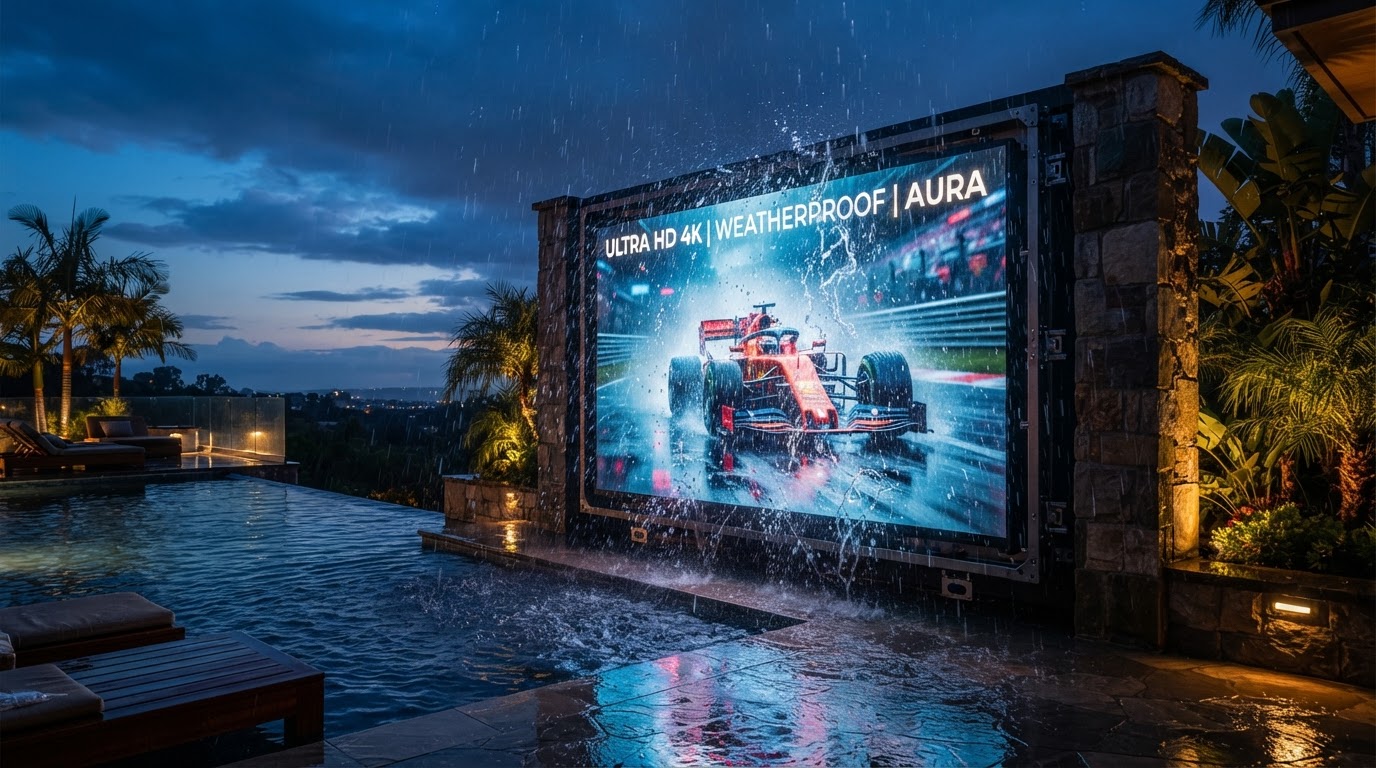
A display sold as "weatherproof" may only carry an IP54 rating, fine for a covered porch, dangerous beside a pool. Rain driven by wind hits a screen like a jet, not a splash. A "weather-resistant" label tells you nothing about how the enclosure performs under driven rain, sprinkler overspray, or pool splash.
If the spec sheet does not state an IP number, assume it is not rated for permanent outdoor exposure.
The risk is not a single rainstorm. It is cumulative exposure: humidity that corrodes contacts over months, dust that settles on hot electronics, condensation that forms inside a poorly sealed cabinet as temperatures swing from day to night. An IP rating is the structural standard that tells you the enclosure was actually tested against those conditions.
The Poolside Standard
For installs within splash distance of water, IP65 is the floor. It guarantees the electronics stay dry through driven rain, sprinkler overspray, and pool splash, without needing a separate enclosure. Outdoor systems are available with IP65–IP68 ingress-protection ratings, depending on the specific display configuration and installation environment.
Rather than forcing every display into a single spec, YOLO TV engineers displays across an IP65–IP68 ingress protection range. The cabinet construction, module seals, and structural configuration are matched directly to the backyard orientation and environmental demands, so IP65, IP66, or IP68 can each be the right choice depending on the project.
Real-World Benefits of Proper IP Protection
With a properly rated weather-sealed display, you do not have to worry about several common outdoor failure modes:
- Accidental sprinkler hits: Direct sprays from automated irrigation systems will not penetrate internal components when the system's IP rating is correctly matched to its exposure.
- All-season durability: Sealed enclosures keep out moisture and humidity that cause corrosion over time, helping the display perform reliably through heat, cold, rain, and seasonal changes.
- Maintenance access: You can safely clean dirt and outdoor grime off the cabinet within the limits of its IP rating, without risking liquid intrusion into the electronics.
How to Read a Spec Sheet Honestly
When a manufacturer lists an IP rating, look for the full two-digit number, not a vague adjective. Ask which part of the system carries the rating, the cabinet, the modules, or both. A component-level IP rating does not automatically describe the entire assembled system. And remember that ingress-protection requirements can vary based on cabinet and module construction, system configuration, installation environment, and the level of weather protection required.
Frequently Asked Questions
Quick answers to the questions homeowners ask most.
IP65 means the enclosure is fully dust-tight (first digit 6) and protected against low-pressure water jets from any direction (second digit 5). It is the minimum rating you should accept for a permanent outdoor installation exposed to rain or splash.
Yes, for more exposed installs. IP66 protects against powerful, high-pressure water jets, while IP65 handles low-pressure jets. Open-air installations with frequent direct rain or hose-down cleaning benefit from IP66.
No. YOLO TV outdoor systems are available with IP65–IP68 ingress-protection ratings, depending on the specific display configuration and installation environment. The rating is matched to the project rather than fixed across every system.
It depends on the actual IP rating. If the spec sheet does not state an IP number, assume it is not rated for permanent poolside exposure. Driven rain and pool splash behave like water jets, not gentle splashes.
Written by YOLO TV Engineering
YOLO TV designs and installs luxury outdoor TVs, hidden Rise™ TV systems, and custom outdoor entertainment solutions for homeowners, builders, architects, designers, and AV integrators. Our engineering team specializes in creating unforgettable outdoor viewing experiences.
Standard Specifications
- IP Rating
- IP65–IP68 (config-dependent)
- Dust Ingress
- Fully sealed
- Water Protection
- Low-pressure jets
- Enclosure Required
- No, standalone
Find the Right Display for Your Outdoor Space
Send YOLO TV a few pictures of your backyard, your installation address, and your approximate viewing distance. We'll help determine the size, brightness, and configuration that make sense for your space.
You May Also Like
More guides and case studies from the YOLO TV engineering team.