Subterranean Vault Installation, Why We Bury the Electronics
The display is only half the system. Here is how a subterranean vault protects the power and control hardware for a clean, safe, long-lived install.
In This Guide
The part of an outdoor display that fails first is almost never the LED panel. It is the power supply, the controller, and the junctions. A vault keeps those components in a controlled environment, and that single decision is what separates a ten-year install from a two-year install.
What Lives Underground
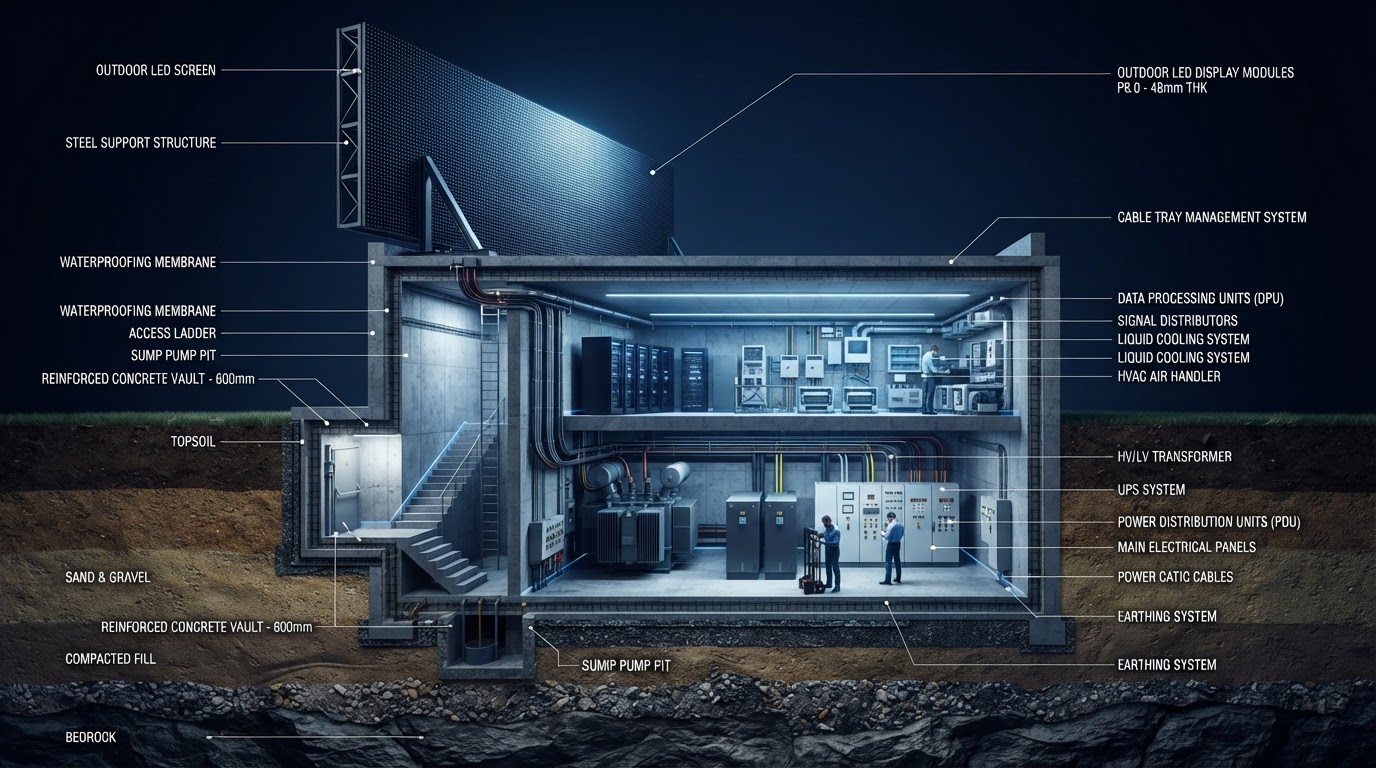
A properly engineered vault contains the hardware that does the real work, and that is most vulnerable to heat, moisture, and tampering:
- Power distribution, isolated and surge-protected, so a lightning strike on a nearby line does not travel straight into the display.
- Controller and media player, climate-stable and serviceable, running the content without baking in the sun.
- Junction and signal hardware, sealed, organized, and labeled, so a technician can trace any connection without guessing.
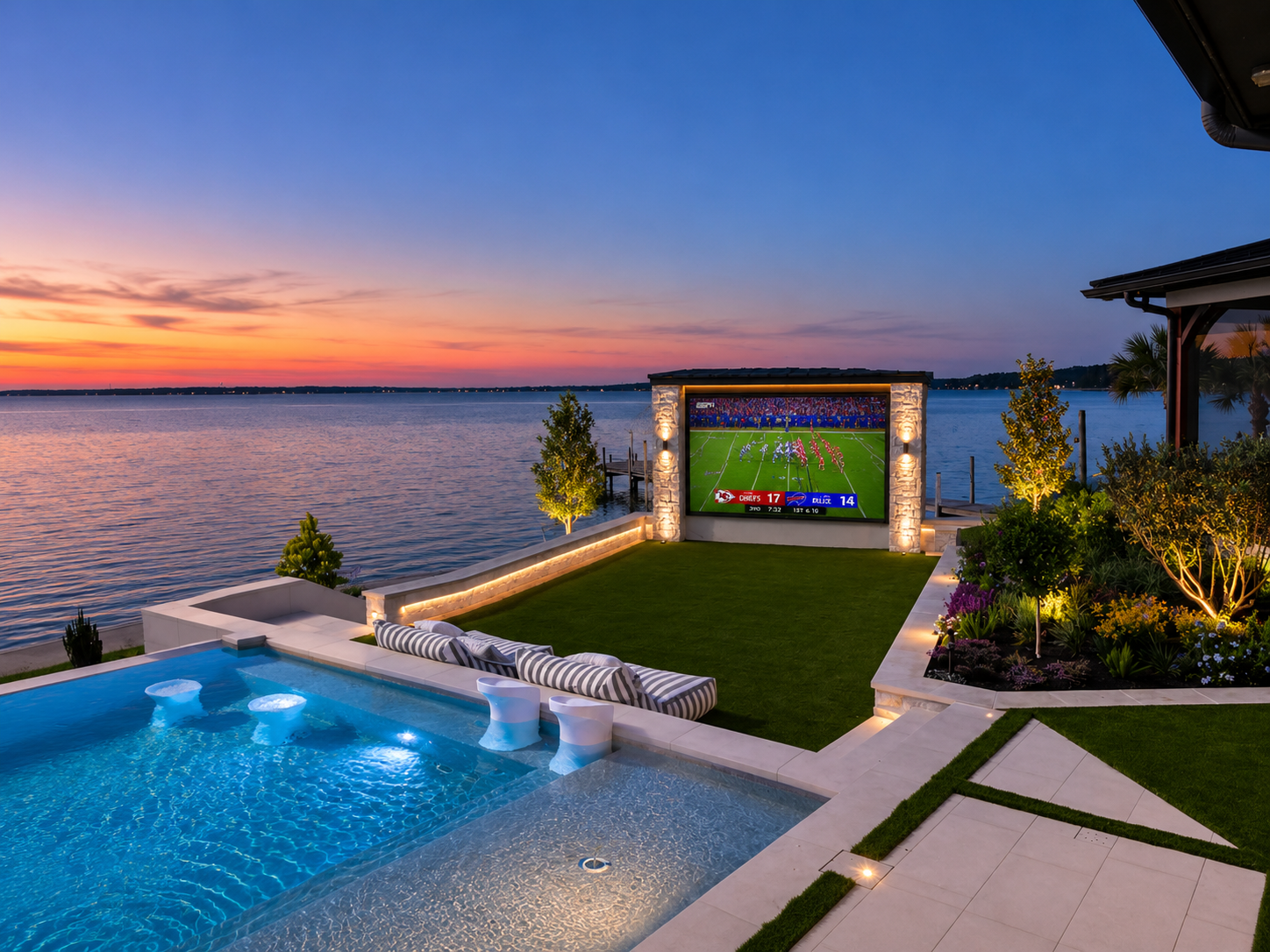
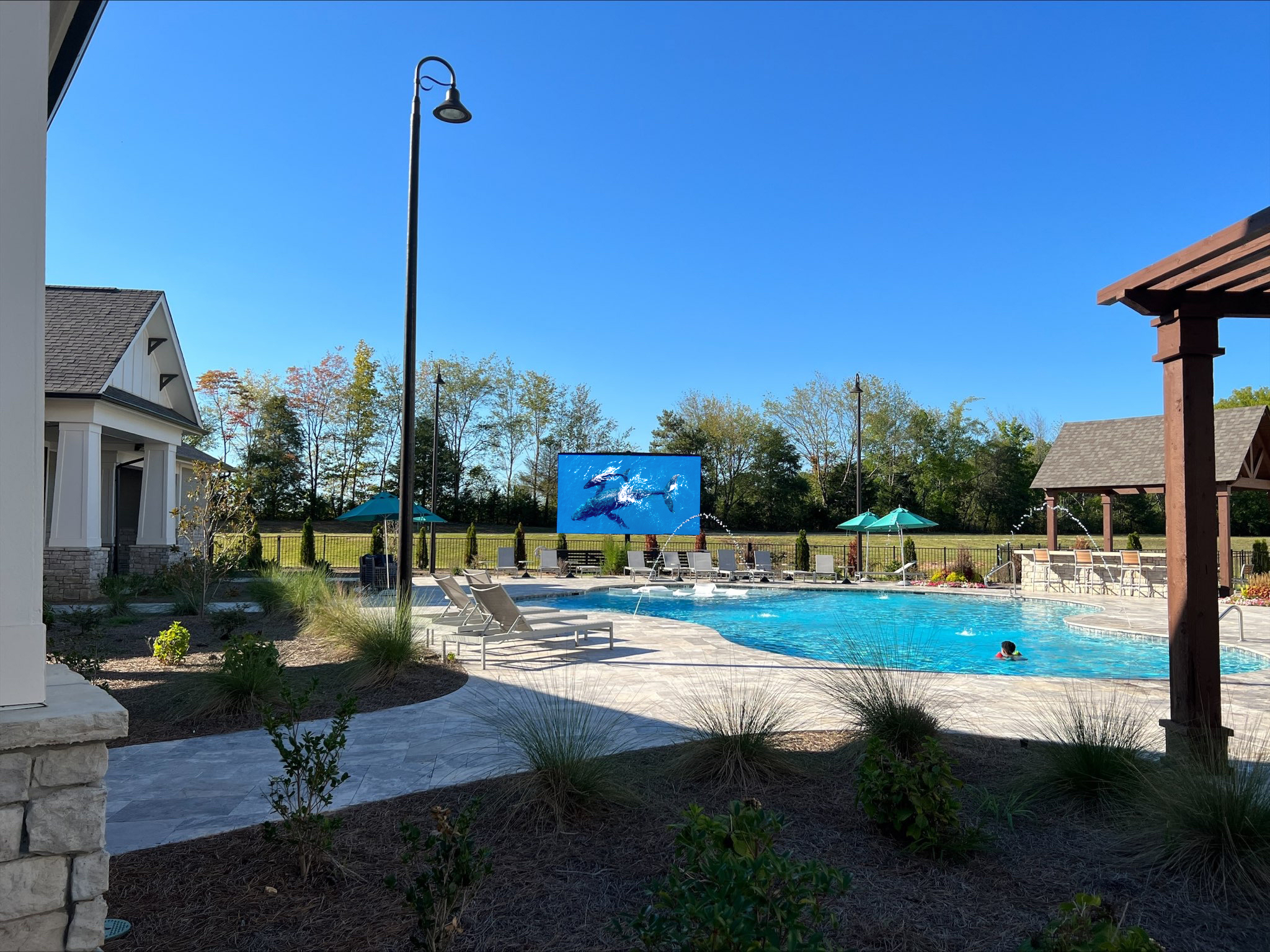
Above ground, only the panel itself and a weather-sealed access point remain visible. The result is a clean architectural look: a large-format display that reads as a feature of the landscape, not a utility cabinet bolted to a wall.
Why Below Grade Works
Above-ground enclosures absorb solar heat, cycling the electronics through extreme temperature swings every day. A metal box in direct sun can reach 140°F internally while the ambient air sits at 95°F. That daily thermal cycling stresses capacitors, dries out seals, and accelerates the aging of every component inside.
A vault stays thermally stable year-round. Below grade, the temperature barely moves between day and night, and seasonal swings are muted. Thermal stability is the single biggest predictor of component lifespan in outdoor electronics. Heat kills components faster than water does, and a vault solves both problems at once.
Heat kills electronics faster than water does. The vault solves both.
Access and Serviceability
A vault is not a sealed tomb. It uses a weather-sealed, lockable access hatch so every component is serviceable without dismantling the display. When a power supply needs attention, a technician opens the hatch, swaps the part, and closes it, the panel never comes down. That is the difference between a one-hour service visit and a half-day project.
This matters most for commercial and shared-property installs where downtime is visible and costly. A poolside residential display can tolerate a service window; a restaurant patio or apartment amenity deck cannot.
Comparing Installation Approaches
| Factor | Subterranean vault | Above-ground enclosure |
|---|---|---|
| Thermal stability | Year-round controlled | Daily solar cycling |
| Component lifespan | Extended | Shortened by heat |
| Service access | Hatch, no panel removal | Often requires panel access |
| Visual impact | Minimal, panel only | Visible cabinet |
When a Vault Makes Sense
A vault is not mandatory for every project. Covered patios and shaded installs with moderate power needs can run from a protected above-ground enclosure. But for full-sun poolside installs, large-format estate walls, and any project where the display runs for long hours in extreme heat, burying the brains of the system pays for itself in reliability and service cost over the life of the install.
Frequently Asked Questions
Quick answers to the questions homeowners ask most.
The power supplies, controllers, and junctions fail before the LED panel does. A subterranean vault keeps those components thermally stable and away from sun, water, and tampering, which extends the life of the entire installation.
Yes. A weather-sealed, lockable access hatch lets a technician reach every component below grade without taking the panel down, turning a major repair into a quick service visit.
No. Covered and shaded installs with moderate power needs can use a protected above-ground enclosure. Vaults are most valuable for full-sun, large-format, or long-hour installations where heat and exposure are extreme.
It improves it. Only the panel and a sealed access point stay above ground, so the display reads as a clean architectural feature rather than a utility cabinet.
Written by YOLO TV Engineering
YOLO TV designs and installs luxury outdoor TVs, hidden Rise™ TV systems, and custom outdoor entertainment solutions for homeowners, builders, architects, designers, and AV integrators. Our engineering team specializes in creating unforgettable outdoor viewing experiences.
Standard Specifications
- Vault Type
- Subterranean concrete
- Thermal Stability
- Year-round controlled
- Access
- Sealed lockable hatch
- Serviceable
- Without panel removal
Find the Right Display for Your Outdoor Space
Send YOLO TV a few pictures of your backyard, your installation address, and your approximate viewing distance. We'll help determine the size, brightness, and configuration that make sense for your space.
You May Also Like
More guides and case studies from the YOLO TV engineering team.